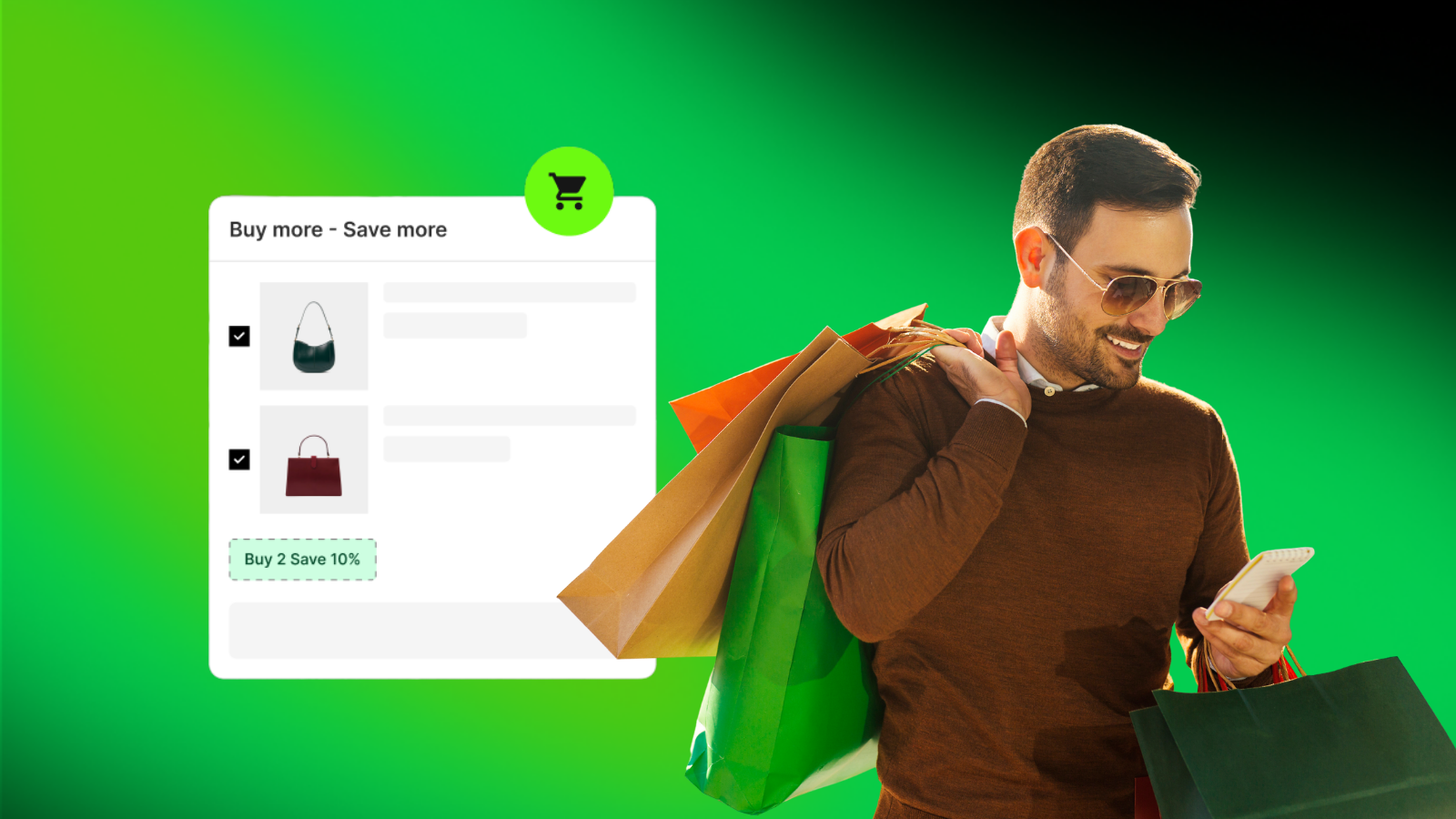
In today’s e-commerce landscape, upselling is not simply about pushing extra products into a customer’s cart. In our experience working with online merchants, it is one of the most practical and scalable revenue strategies for increasing Average Order Value while maximizing existing traffic. When implemented correctly, upsell and cross-sell efforts do not feel intrusive. Instead, they feel helpful and relevant. According to McKinsey, personalized upsell and cross-sell strategies can contribute 10 to 30 percent of total revenue. At the same time, global e-commerce sales are projected to surpass 6.3 trillion dollars in 2024, according to Statista, which highlights the enormous opportunity to grow revenue without increasing acquisition costs.
However, we have consistently observed that upsell success depends heavily on timing and context. Showing irrelevant offers too early or without personalization can easily frustrate shoppers, especially when average cart abandonment rates reach 70.19 percent across industries, according to the Baymard Institute in 2024. When offers feel disconnected from customer intent, they reduce trust instead of increasing value. This is why tools like Zotasell play a critical role. By automating behavior-based upsell logic without requiring code, merchants can deliver the right offer to the right customer at the right moment, improving both AOV and overall customer satisfaction in a measurable way.
I. Why You Should Segment Customers When Running Upsell Campaigns
In e-commerce, there is no single upsell strategy that works for everyone. Each customer arrives at your store with a different goal, a different willingness to spend, and unique shopping behavior. Segmenting customers based on their behavior and characteristics allows you to choose the most relevant offer for each individual, which increases upsell acceptance rates and improves Average Order Value (AOV).
1. Shopping behavior varies across customer segments
A study by McKinsey & Company shows that customer purchasing behavior differs significantly depending on their level of interaction and experience with a brand. In our implementation work, this gap is usually visible within the first week because first-time buyers tend to skip upgrades, while returning and loyal customers engage more when the offer matches what they previously viewed or bought.
- First-time buyers usually purchase only one item and tend to be more cautious about spending extra.
- Repeat buyers have a clearer understanding of the brand’s value and are more willing to spend more when the upsell offer aligns with their needs.
- Loyal and VIP customers typically have a Customer Lifetime Value (CLV) that is over 200% higher than that of new customers.
Segmenting customers allows you to better understand the motivations and expectations of each group, which in turn helps you craft upsell offers that are truly relevant to their needs.
2. Poorly targeted upsell offers reduce campaign effectiveness
Not every upsell works for every customer. When you use the same upsell message across all users, several issues may arise:
- First-time buyers may perceive the offer as “too demanding” and abandon the checkout process.
- VIP customers may find the offer “too basic” and unappealing.
According to Forrester Research, stores that apply effective customer segmentation can increase conversion rates by 25-30% compared to those using one-size-fits-all upsell strategies. When upsell content is personalized based on user behavior and order value, shoppers are more likely to feel understood and are significantly more inclined to take action.
3. Optimize the shopping experience using data

Today, customer data is no longer a luxury. According to Salesforce, over 76% of consumers expect a personalized shopping experience, and 52% are willing to share personal data in exchange for more relevant product recommendations.
Segmenting buyers based on behavioral data, such as viewed products, past purchases, visit frequency, and cart value, enables you to trigger the right upsell at the right time. For example:
- Customers who frequently browse premium items can be shown high-end bundles.
- Shoppers who tend to buy low-priced products respond better to soft-priced add-ons.
- Holiday-only buyers are more likely to engage with themed bundles.
Zotasell helps you automate this process by collecting customer data and allowing you to set tailored upsell rules for each segment in just a few clicks.
4. Customer segmentation improves marketing cost efficiency
A study by Epsilon found that personalized campaigns based on customer segmentation can increase ROI by more than 150 percent compared to non-segmented campaigns. This shows how powerful targeted messaging can be when aligned with customer behavior. When you segment your audience, you focus upsell offers on shoppers who are most likely to accept them. At the same time, you reduce unnecessary impressions that do not generate conversions. This helps improve both efficiency and profitability.
Segmentation becomes even more important during high-traffic seasons such as Valentine’s Day, Black Friday, or Christmas. During these periods, visitor volume rises quickly, but the purchase window is short. Brands must act fast and stay relevant. By aligning upsell strategies with the right customer segments, you improve marketing efficiency. You also create experiences that feel more personal and meaningful to shoppers.
II. Common Customer Segments and How to Choose the Right Upsell
Not all customers have the same needs, and this significantly affects how you design your upsell strategy. Understanding the unique characteristics of each group allows you to tailor offers that resonate, which in turn boosts both upsell acceptance rates and the Average Order Value (AOV).
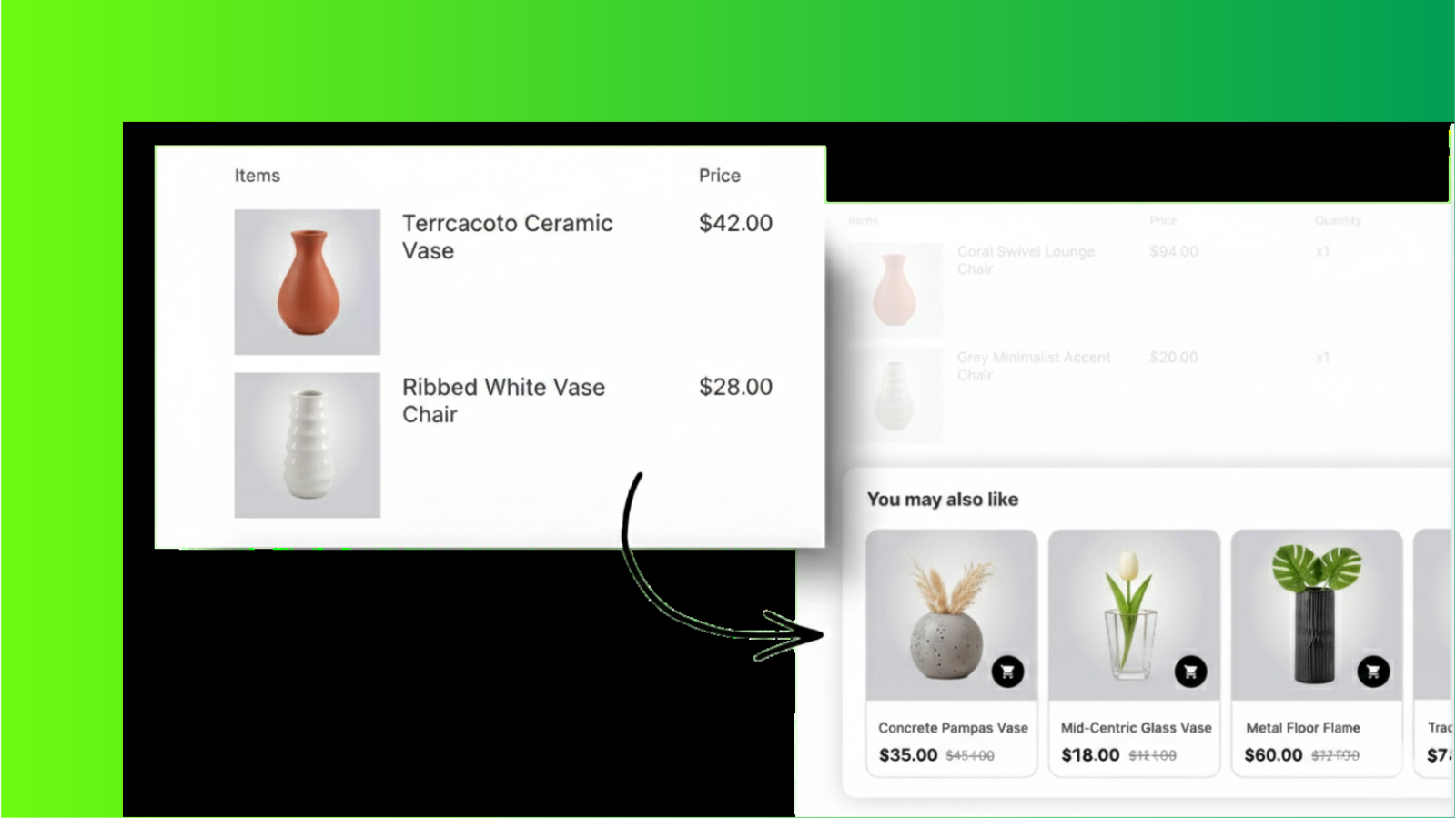
Below are the most common customer segments in ecommerce, along with upsell strategies that work best for each one:
1. First-Time Buyers
Characteristics
This segment includes users who are visiting or making a purchase from your store for the very first time. They tend to be more cautious with spending, and they are less likely to accept high-value upsell offers. According to Sand Hill Dev, first-time buyers typically generate only 40 to 50 percent of the order value compared to returning customers. Their main priority is minimizing risk and making sure the first purchase feels safe and worthwhile.
When we set up upsells for first-time buyers, we noticed that large bundles and premium upgrades usually get ignored, even when the discount looks attractive. This is why the most effective upsell approach for this group focuses on trust-building and incremental value. Small add-ons that feel like “finishing touches” often perform better because they improve the first experience without increasing perceived risk.
Best Upsell Strategy
Because this group needs reassurance and low-risk engagement, your upsell strategy should focus on building trust and offering incremental value. Avoid expensive upgrades at this stage. Instead, recommend small add-ons that enhance the main purchase. These may include handwritten cards, gift wrap, or minor accessories that complete the experience without significantly increasing the total cost.
You can also introduce entry-level or trial-based incentives. For example, encourage customers to add one more item to unlock free shipping. Displaying customer reviews or social proof near the upsell suggestion further increases credibility and reduces hesitation. Rather than pushing high-ticket bundles, your goal should be to create a positive first purchase experience. This approach increases Average Order Value while building the foundation for long-term loyalty.
2. Returning Buyers
Characteristics
These are customers who have purchased from your store one or two times before. They are no longer completely new to your brand and have already developed a certain level of familiarity with your products, pricing, and service quality. Because they have had a positive prior experience, their level of trust is significantly higher than that of first-time buyers. According to Barilliance, returning customers are up to 2.4 times more likely to make an additional purchase compared to new customers. This makes them a highly valuable segment for strategic upselling, as they are more receptive to relevant recommendations and logical product extensions.
Best Upsell Strategy
For this segment, you can confidently introduce upsell offers with slightly higher value or deeper relevance, since the initial trust barrier has already been overcome. Effective approaches include:
- Bundle suggestions based on purchase history. For example, if a customer previously bought a toner, you can recommend a complete skincare routine that includes cleanser, toner, serum, and moisturizer. This approach positions the upsell as a natural progression rather than an unrelated suggestion.
- Advanced add-ons or complementary upgrades. If the customer purchased a serum, consider offering a higher-grade face mask, an intensive treatment, or a premium version that enhances overall results. This makes the upsell feel like a performance upgrade rather than a sales push.
- Quantity upgrades or gift-ready sets. Suggesting a larger size, a multi-pack, or a complete gift bundle that includes wrapping and accessories works particularly well with customers who already appreciate your products. It increases convenience while raising Average Order Value.
In our tests, returning buyers were more likely to accept upsells when the offer matched their previous purchases or browsing behavior. Because they already trust your brand, they respond well to relevant enhancements. The upsell should feel like a natural next step, such as completing a routine or upgrading performance, rather than introducing something unrelated.
3. VIP / High-Spending Customers

Characteristics
This customer group has a high Customer Lifetime Value and returns to the shop frequently. They are deeply familiar with your brand and show strong purchasing intent across multiple transactions.
Unlike new or occasional buyers, VIP customers are consistently willing to spend more. However, they only respond when the upsell delivers clear and meaningful value. The offer must feel differentiated and exclusive. According to industry research, VIP customers can contribute 60 to 70 percent of a store’s total revenue. At the same time, they represent only a small portion of the overall customer base. This makes them one of the most strategically important segments for targeted upselling.
Best Upsell Strategy
From our experience analyzing high-spending segments, VIP customers respond best when the offer feels exclusive and personal. They do not react well to generic discounts. Because they are highly engaged and already trust your brand, the upsell should highlight exclusivity and premium positioning. Personalization is essential at this stage.
- Offer high-end or limited-edition products. These may include luxury versions, curated gift sets, early-release collections, or products with exclusive packaging available only to loyal customers. Scarcity and uniqueness increase perceived value and strengthen emotional attachment.
- Create a VIP-only upgrade experience. This can involve early access to new product launches, complimentary premium shipping, extended warranties, or private bundles that are not visible to general visitors. Framing the upsell as a reward for loyalty increases acceptance.
- Present premium bundles with a personalized message. For example, you can recommend a “Luxury Self-Care Set” that complements their previous purchases and position it as a curated selection designed specifically for them. Including language such as “Selected for you based on your recent orders” enhances relevance and exclusivity.
For this segment, personalization is not optional but essential. The more exclusive, tailored, and status-driven your upsell feels, the more likely VIP customers are to accept it and significantly increase their order value.
4. Low-Spending / Value-Conscious Customers
Characteristics
This segment typically makes small, single-item purchases at lower price points. They are highly price-sensitive and tend to respond best to affordable deals or budget-friendly bundles. These customers often shop cautiously, keeping their cart totals low and avoiding purchases that feel financially risky. Their primary motivation is value for money, and they are more likely to compare prices or abandon their cart if the total increases too sharply.
Best Upsell Strategy
For value-conscious customers, upselling should feel light, supportive, and low-commitment. The objective is to gradually increase cart size without creating pressure or sticker shock.
- Recommend low-cost add-ons. These may include mini items such as greeting cards, stickers, small accessories, sample-sized products, or simple gift enhancements that complement the main purchase without significantly raising the total cost.
- Use conditional offers. Examples include “Add one more item to get free shipping” or “Spend $5 more to unlock a free gift.” These incentives provide a clear and achievable target, encouraging incremental spending without relying on aggressive discounts.
- Keep the upsell simple and easy to understand. Avoid complex bundles or premium upgrades that may feel financially out of reach. Instead, focus on small, practical additions that feel like smart, low-risk decisions.
This group responds best to upsells that deliver tangible value at minimal extra cost, especially when the offer enhances convenience or completes the purchase experience. Even a modest increase of three to five dollars in Average Order Value from this segment can create a meaningful revenue impact when scaled across a large volume of transactions.
5. Seasonal Shoppers
Characteristics
This group shops primarily around specific holidays or major events such as Valentine’s Day, Black Friday, Christmas, or Lunar New Year. Their purchasing behavior is highly occasion-driven and often influenced by emotional triggers, limited-time promotions, and festive messaging. These customers usually arrive with a clear purpose, which is to find gifts or products that match the theme of the celebration. Their buying decisions are frequently time-sensitive, especially as delivery deadlines approach. According to the National Retail Federation, holiday shopping periods can account for 25 to 30 percent of total annual revenue for many retail sectors, which highlights the significant revenue potential during these high-intent windows.
Best Upsell Strategy
For seasonal shoppers, contextual alignment is essential. Your upsell must feel like a natural extension of the holiday experience rather than a generic add-on. Relevance and timing are the primary drivers of acceptance.
- Offer holiday-specific bundles.
Valentine’s Day can feature romantic gift sets that include flowers, handwritten cards, and chocolates. Black Friday works best with high-value discounted bundles that emphasize savings and urgency. Lunar New Year can include festive gift sets with traditional items, red envelopes, or themed packaging.
- Use seasonal design and messaging. Incorporate festive visuals, themed color palettes, and emotionally resonant language that reflects the spirit of the occasion. Highlight time-sensitive cues such as shipping deadlines or limited inventory to encourage timely decisions.
Because purchase intent is already elevated during these peak periods, well-timed and relevant upsell offers can significantly increase Average Order Value. When the suggestion enhances the emotional or practical value of the seasonal purchase, customers are far more likely to accept it without hesitation.
III. Common Mistakes When Implementing Customer-Segmented Upsell Strategies
While upselling is one of the most powerful tools for increasing Average Order Value (AOV), poor execution can lead to the opposite effect. When businesses fail to understand user behavior or context, upsell offers may feel intrusive, reduce conversion rates, and negatively impact the overall shopping experience.
Here are the most common mistakes:
1. Lack of Clear Customer Segmentation
Many stores apply the same upsell offers to every visitor, regardless of whether they are first-time buyers, loyal customers, or casual browsers. According to research by Epsilon, 80% of consumers are more likely to make a purchase when the experience feels personalized.
Without clear segmentation, upsell suggestions often feel irrelevant and are easily ignored. For instance, displaying an offer to upgrade to a premium product bundle for a first-time buyer may create unnecessary pressure, leading to cart abandonment rather than conversion.
Solution: Use behavioral segmentation based on factors such as purchase history, browsing behavior, and average order value to tailor upsell offers to each customer group. With Zotasell, merchants can easily build no-code logic to segment customers and deliver upsells that match their real-time intent and preferences.
2. Displaying Upsell Offers at the Wrong Stage of the Buyer Journey
According to data from Baymard Institute, interrupting the customer journey with poorly timed suggestions can significantly reduce conversion rates. When upsell offers are shown too early, before the shopper has demonstrated clear buying intent, they can come across as intrusive or irrelevant. On the other hand, if the upsell appears too late, such as after the purchase is completed, the opportunity to increase average order value (AOV) is missed entirely.
Solution: Position upsell offers at strategic moments, such as immediately after an item is added to the cart, within the cart drawer, or right before the checkout step. Zotasell enables multi-touchpoint upsell deployment, allowing you to tailor timing based on real-time shopper behavior and optimize for maximum impact.
3. Irrelevant or Inappropriate Product Suggestions
Suggesting products that are unrelated to what the customer is currently viewing or has added to their cart not only fails to increase average order value (AOV) but can also damage brand credibility. According to a study by Salesforce, 70% of consumers expect businesses to understand their personal needs.
For example, if a customer is browsing skincare products and receives a recommendation for tech accessories, the mismatch may confuse them and reduce trust in your system’s suggestions.
Solution: Set up product recommendation logic based on collections, product types, or browsing history. With Zotasell’s AI-driven recommendation engine, you can generate relevant upsell offers in real time, based on customer behavior and product compatibility. This ensures that every suggestion feels timely, helpful, and aligned with shopper intent.
4. Prioritizing AOV at the Expense of User Experience
Upsell strategies can backfire if they overwhelm shoppers or make the purchasing process feel cluttered and unintuitive. According to a study by Nielsen Norman Group, up to 47% of users will abandon a website if they find the shopping flow too complex or confusing.
Common pitfalls include displaying too many upsell offers at once, overusing pop-ups, or creating inconsistent page layouts. These elements can distract customers, reduce engagement, and ultimately lower the chances of completing a purchase.
Solution: Limit the number of upsell suggestions per touchpoint. Focus on natural placements such as the cart drawer, shopping cart page, or below product descriptions. With Zotasell, you have full control over the quantity and format of each upsell offer, allowing you to maintain a clean, cohesive shopping experience while still driving additional value.
5. Lack of Post-Launch Tracking and Optimization
One of the most common mistakes in upselling is failing to monitor and optimize after implementation. According to a HubSpot survey, 63 percent of marketers cited the lack of post-campaign data analysis as a primary reason for upsell failures. This shows that strategy alone is not enough without continuous measurement.
Without tracking key metrics such as click-through rate, conversion rate, and Average Order Value by customer segment, you cannot clearly see what is working. It also becomes difficult to identify underperforming offers or decide where adjustments are needed.
Solution: Use Zotasell’s performance dashboard to monitor each combo in real time. Track impressions, click-through rates, conversion rates, and AOV by segment. Combine this with A/B testing to compare different upsell versions. This allows you to refine messaging, visuals, and timing to achieve stronger results for each customer group.
IV. Tips for Effective Upsell Implementation by Customer Segment
An effective upsell strategy is not defined solely by the product you recommend, but by how well the offer aligns with the customer’s profile, purchase intent, and position in the buying journey. Relevance, timing, and context are critical factors that influence acceptance rates and ultimately drive higher Average Order Value. By tailoring your upsell logic to different customer segments and behavioral signals, you can present offers that feel helpful rather than intrusive.

1. First-Time Buyers
Mindset
First-time buyers are typically cautious and more risk-aware when making a purchase decision. They are still evaluating your brand’s credibility, product quality, and overall shopping experience. Their priority is to try the product with minimal financial risk and at a reasonable price point before considering larger commitments. Because trust has not yet been fully established, aggressive or high-value upsell offers may feel overwhelming and reduce conversion likelihood.
Recommended Placement
Placement plays a critical role in acceptance. Display the upsell immediately after the product is added to the cart within the cart drawer, since purchase intent is already established at that moment. Reinforce the offer again on the checkout page with messaging such as “A popular choice among new customers” to strengthen social proof and reduce last-minute hesitation.
Why It Works
According to Barilliance, well-personalized trial bundles can increase Average Order Value from first-time buyers by up to 17 percent. By keeping the offer low-risk, relevant, and value-oriented, you increase the likelihood of acceptance while delivering a positive first purchase experience that encourages future repeat buying.
2. Returning Buyers
Mindset
Returning buyers have already completed one or two purchases, which means they have developed a certain level of trust in your brand. They are familiar with your product quality, delivery experience, and overall service. However, while trust has been established, they still need a clear and compelling reason to increase their spending. They are more confident than first-time buyers, yet they expect relevance and added value before committing to a larger cart.
Recommended Placement
Display upsell suggestions directly on the product page or inside the cart drawer, where buying intent is already active, and attention is focused. Additionally, send post-purchase upsell emails to re-engage customers after checkout. Zotasell supports integrations through webhooks or third-party tools, allowing you to automate these follow-up offers efficiently.
Why It Works
According to Harvard Business Review, returning customers are more than 60 percent more likely to make another purchase compared to new buyers, particularly when the recommendation feels both familiar and refreshingly new. By offering relevant and complementary products, you guide them toward a higher Average Order Value in a natural way that strengthens loyalty rather than interrupting the shopping experience.
3. Loyal Customers and VIPs
Mindset
Loyal customers and VIPs have already built a strong relationship with your brand through repeated positive experiences. They trust your products, understand your value proposition, and are generally less sensitive to price compared to other segments. Their purchasing decisions are often influenced by exclusivity, recognition, and the desire for a premium experience. They want to feel appreciated and differentiated from regular shoppers, and they are more willing to spend when the offer reflects that elevated status.
Recommended Placement
Display personalized upsell offers on the login pop-up or account dashboard, where the customer’s identity and loyalty status are already recognized. You can also highlight premium bundles within the cart drawer using a clean, elegant design that reflects a high-end brand experience and aligns with their expectations.
Why It Works
According to Accenture, 91 percent of consumers are more likely to shop with brands that provide relevant offers and personalized experiences. For loyal and VIP customers, tailored upsell strategies not only increase Average Order Value but also deepen engagement, strengthen brand loyalty, and significantly improve long-term customer lifetime value.
4. High Cart Value Customers
Mindset
These customers have already demonstrated strong purchase intent by adding high-value items to their cart. Both financially and psychologically, they are prepared to spend more, especially when the additional offer enhances the overall experience rather than simply increasing the total price. At this stage of the journey, hesitation is lower, and commitment is significantly higher, which makes this one of the most strategic moments for a well-positioned upsell.
Recommended Placement
Display these upsell offers immediately before checkout, when commitment and purchase intent are at their highest point. You can also automatically trigger offers when the cart exceeds a predefined threshold, which can be easily configured within Zotasell using rule-based logic tied to cart value.
Why It Works
According to PRCH, customers with carts exceeding 100 USD are more than 30 percent more likely to accept an upsell when the suggested item enhances the overall experience rather than merely adding cost. By positioning the upsell as an upgrade in quality, presentation, or long-term value, you increase Average Order Value while maintaining a strong premium brand perception.
5. Mobile Shoppers
Mindset
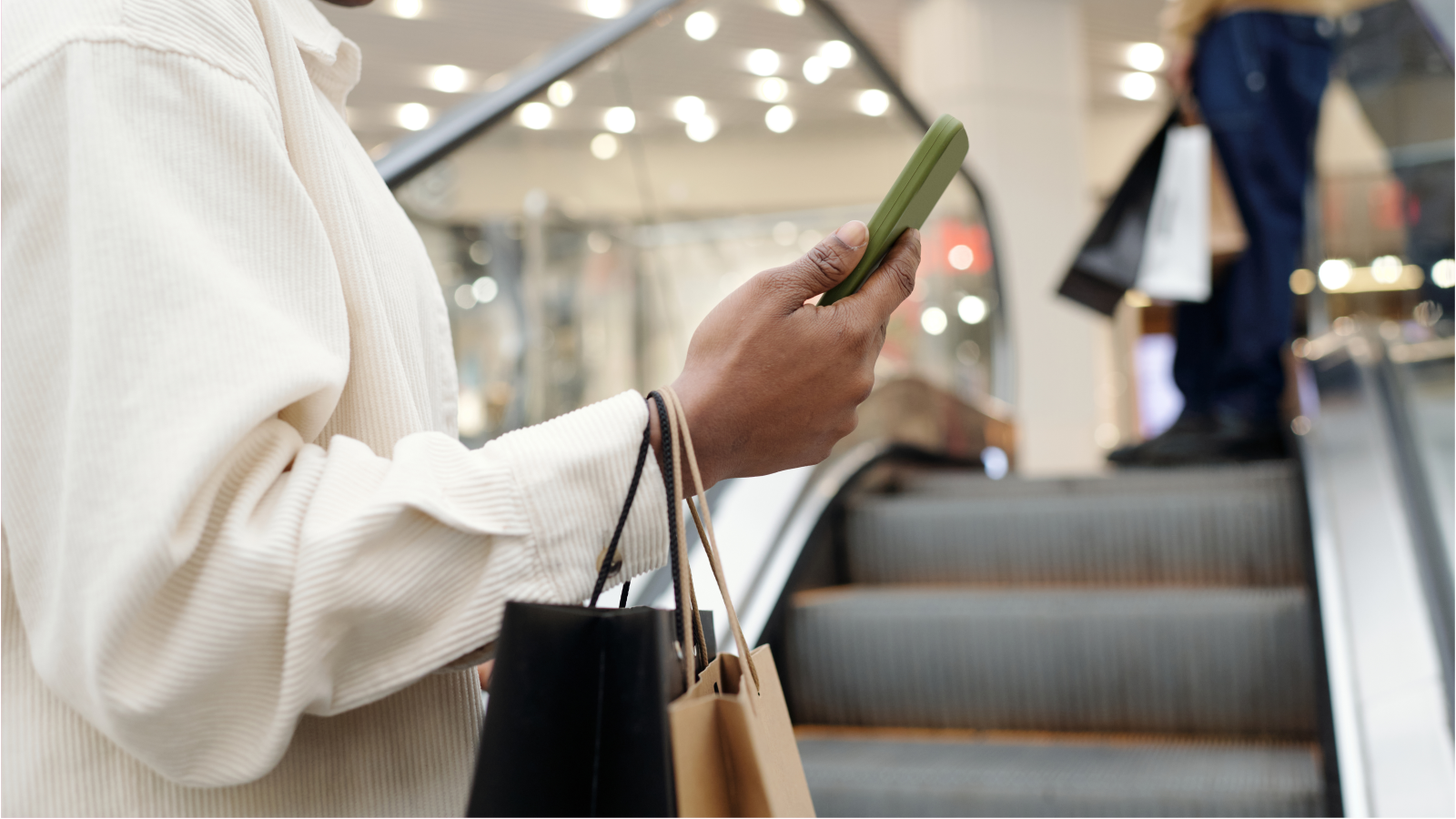
Mobile users tend to browse quickly and make faster decisions compared to desktop shoppers. Their attention span is shorter, and they are highly sensitive to navigation friction. Because screen space is limited, even small disruptions such as slow-loading elements or intrusive pop-ups can immediately lead to drop-off. For this group, clarity, speed, and seamless flow are critical to maintaining engagement and driving conversion.
Recommended Placement
Integrate upsell offers directly into the cart drawer so users remain on the same page and maintain their shopping momentum. Avoid redirecting them to separate pages or triggering full-screen pop-ups, since these interruptions often increase bounce rates on mobile devices.
Why It Works
According to a report by Dynamic Yield, mobile upsell offers achieve the highest conversion rates when displayed inside the cart drawer while preserving a seamless scrolling experience. By minimizing friction and maintaining flow, you increase both upsell acceptance and overall checkout completion rates on mobile, which directly contributes to higher Average Order Value and improved mobile revenue performance.
V. Afterthought
After working with upsell implementations across different ecommerce brands, we have learned one important lesson. Sustainable revenue growth does not come from adding more offers. It comes from building a structured upsell system. This system must align customer intent, lifecycle stage, and value positioning. Stores that consistently increase Average Order Value treat upselling as a long-term growth strategy. They do not see it as a short-term sales tactic. When merchants match the right offer to the right segment at the right moment, upsells feel natural. They become part of the buying journey instead of interruptions.
Customer acquisition costs continue to rise, and competition is becoming more intense. Because of this, improving revenue efficiency is no longer optional. Increasing AOV strengthens the CAC to LTV ratio. It also improves profitability and reduces reliance on paid traffic. Zotasell is built around this principle. It combines behavioral segmentation, flexible placement logic, AI-driven recommendations, and real-time analytics in one no-code platform. When upselling is structured and data-driven, it becomes scalable. It supports long-term growth instead of acting as a random promotional tactic.