


Why 80% of Traditional Bundles Fail & How to Fix Them
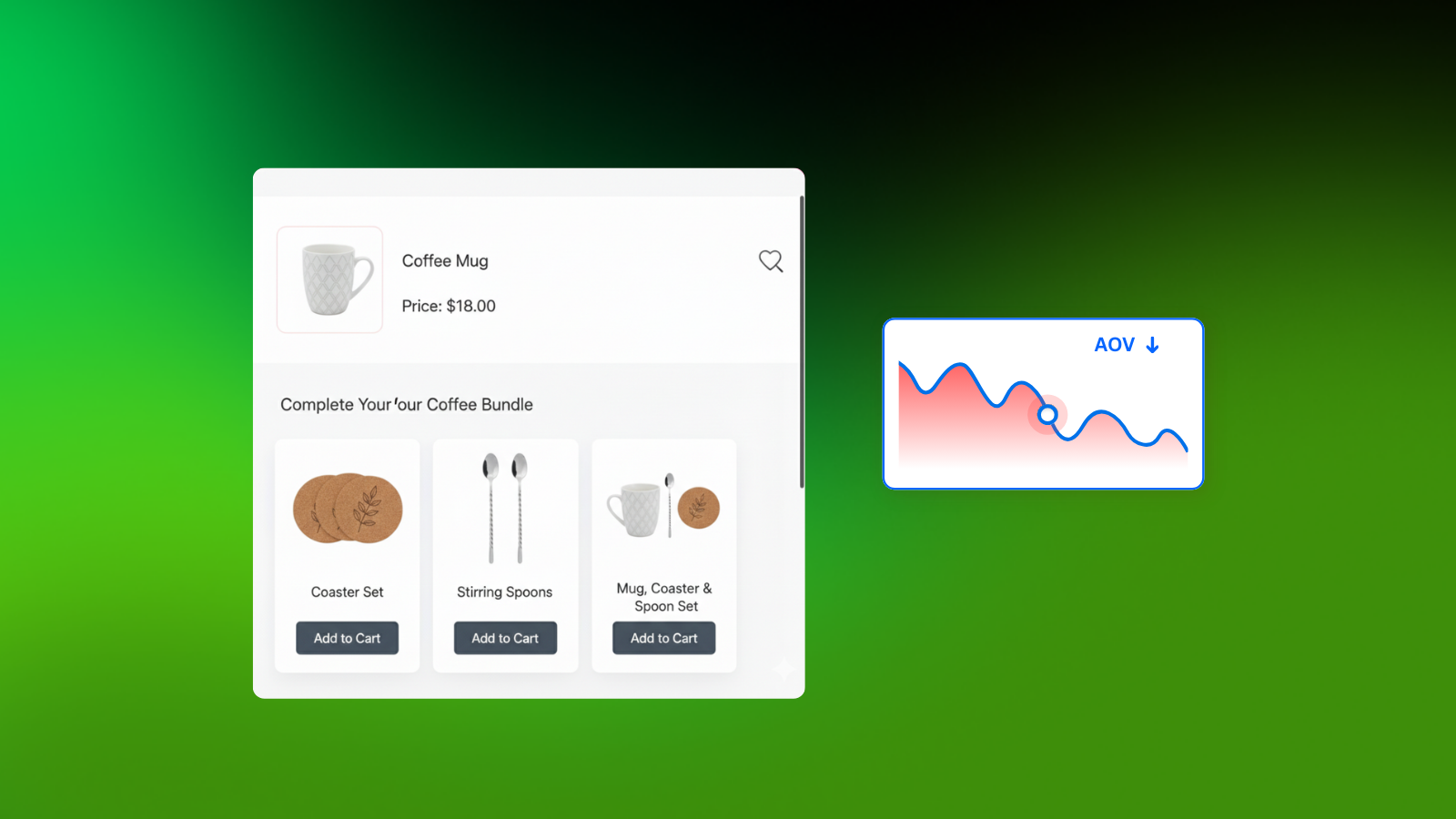
Table of content
In today’s competitive e-commerce environment, increasing average order value (AOV) without raising advertising costs is a top priority for many retailers. According to Swell, AOV-boosting strategies can grow revenue by 20% to 30% per customer when applied effectively. Forrester research also shows that smart product bundling can lift AOV by up to 35% compared to selling items individually, while real-world case studies have reported AOV increases of 15-20% within just a few weeks of implementation.
Despite its potential, up to 80% of traditional bundles still fail. Most are assembled without considering customer behavior or purchase intent, leading to combinations that lack perceived value and fail to convert. In this article, we’ll explore five common reasons why bundles fall short and outline a proven framework for designing smarter, personalized bundles that actually drive conversions and long-term growth.
I. Why Traditional Bundles Often Fail
Although product bundling is a strategy widely used in e‑commerce to increase average order value (AOV), the reality is that many bundles still fail to deliver expected results. Designing combos in a haphazard way without strategy not only fails to increase orders but sometimes even disrupts the shopping experience, leading to low conversion rates. Below are the five main reasons explaining why traditional bundles often fail:
1. Products in the bundle lack a logical association
Bundling without a strategy often leads to failure, especially when the products grouped together don’t follow a clear usage logic. In several bundle campaigns we’ve reviewed, merchants grouped products based on internal inventory logic rather than customer usage logic. These bundles looked reasonable from a catalog perspective, but failed to generate clicks because shoppers couldn’t understand how the items worked together in real life.
For example, online shoppers aren’t just buying skincare, they’re searching for complete routines like a “3-step solution for dry skin.” They’re not looking for single kitchen tools, but a “family cooking set” that makes meal prep easier. When a combo lacks this kind of unified purpose, shoppers struggle to see its value, and the perceived benefit over buying items separately disappears.
According to behavioral analytics from top ecommerce platforms like Shopify and BigCommerce, bundles with a well-defined usage context are up to 2.4x more likely to convert than random product groupings. This reinforces the importance of relevance and intent. Instead of asking, “What can I group?”, ask, “What problem am I solving for the buyer?”
2. The combo price fails to convey a clear sense of savings
A crucial factor influencing purchase decisions is the perception of economic benefit. Traditional bundles often fail when:
- The savings compared to buying items separately are not clearly displayed.
- The discount is too small, making customers feel they are not getting a real benefit.
- The discount is too deep, raising doubts about product quality or authenticity.
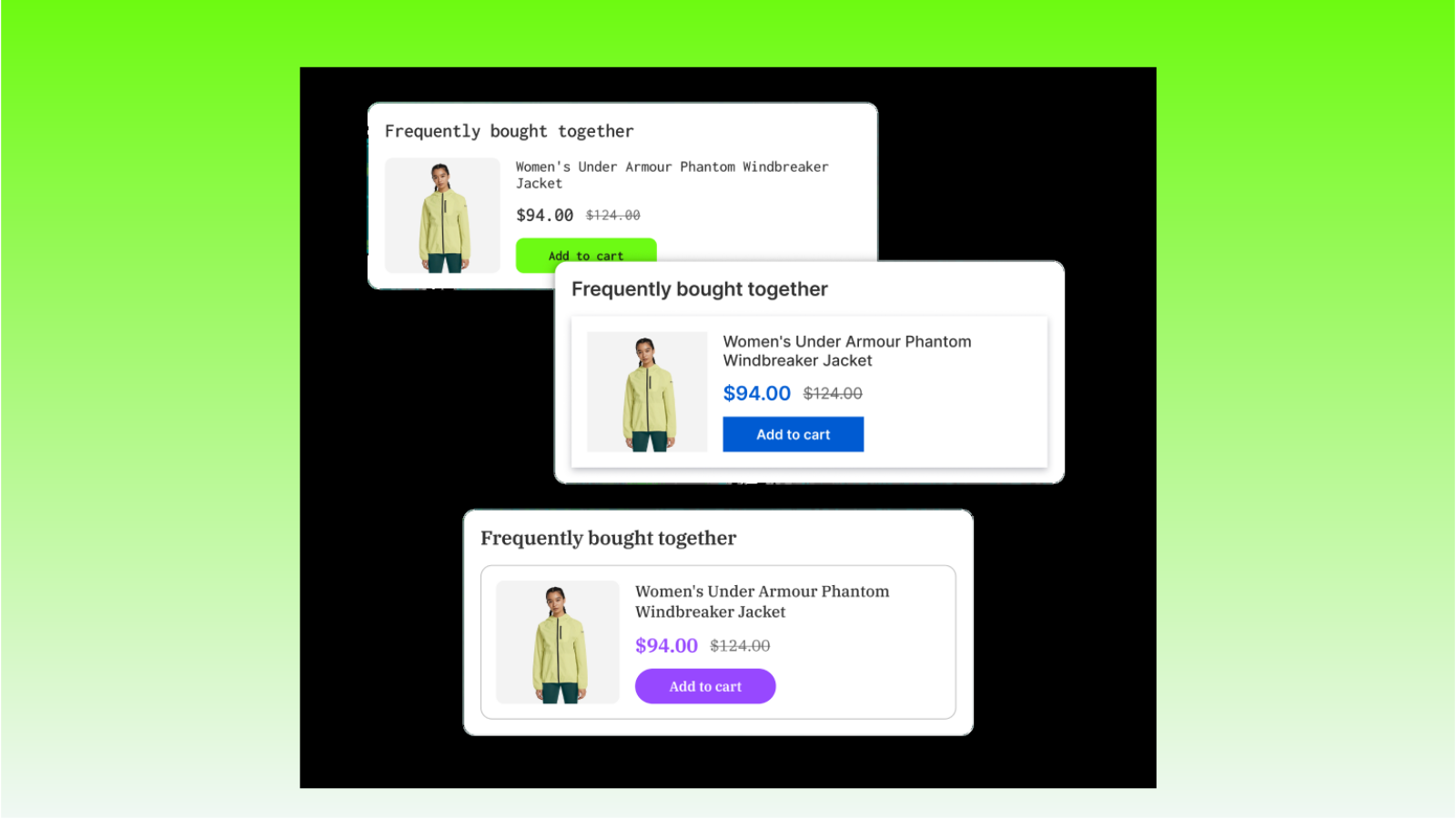
Many consumer behavior analyses suggest that shoppers are more attracted to specific amounts saved (e.g., “You save $20”) rather than percentage discounts. One reason is that a specific amount is more visually tangible and easier for customers to compare against their personal budget.
Traditional bundles often just group products with a general discount, but today’s shoppers want a clear financial benefit. In our tests with a home and living brand, layouts showing the exact amount saved outperformed percentage-only discounts. Customers responded better when they could instantly see the monetary value without doing mental math.
3. The combo is too rigid and lacks personalization options
Modern ecommerce shoppers expect flexibility. In today’s personalized shopping environment, rigid, one-size-fits-all bundles feel outdated and often fail to resonate with individual customers. Although the idea behind bundling may be strong, execution often falls short due to a lack of personalization. We’ve seen multiple cases where customers clicked into a bundle but dropped off after realizing they couldn’t change a single variant. Even when they liked most of the combo, one mismatch was enough to stop the purchase.
Common issues with non-personalized bundles include:
- No ability to change color, size, or product variant
- No flexibility to swap out items within the combo
- No option to adjust quantity based on personal preferences
Customers may initially be interested in a combo, but one small mismatch can turn them away. For instance, if a product does not come in their preferred scent, size, or variant, they are more likely to abandon the entire cart rather than try to make it work.
According to a 2023 study by Forrester, 74% of consumers say they are more likely to buy from brands that offer personalized experiences. This finding highlights the growing demand for tailored shopping journeys. Allowing buyers to feel in control of their selections not only improves user satisfaction but also directly impacts conversion rates.
When bundles offer choices and reflect real customer preferences, they are significantly more likely to convert. Personalization is no longer a luxury in ecommerce; it is an expectation. A static, rigid combo can limit your potential revenue and fail to meet the standards of today’s informed and empowered consumers.
4. The bundle is buried too deeply in the store interface
User experience design plays a crucial role in the effectiveness of any ecommerce sales strategy, and bundling is no exception. Even well-structured product bundles can underperform when they are not displayed in a way that captures customer attention. In many online stores, bundles fail not because of weak value but because shoppers simply do not notice them.
Common visibility issues include:
- The combo is placed too far down the product page
- There is no clear or engaging visual representation of the bundle
- The value proposition or benefit message is not highlighted
- There is no strong and clear call to action, such as “Buy this set and save.”
When a bundle is hidden within the interface or lacks a strong visual hierarchy, customers are unlikely to engage with it, regardless of how good the offer is. Shoppers tend to scan pages quickly, focusing only on elements that immediately communicate value.
This issue is even more critical on mobile, where screen space is limited and attention spans are shorter. Every element must stand out. If a bundle is not placed strategically with clear visuals and messaging, it will be overlooked, reducing its impact on conversion and AOV. In ecommerce, visibility drives action. If shoppers cannot quickly see and understand a bundle, they are unlikely to consider it in their purchase decision.
5. The bundle is not integrated into the overall upsell & cross‑sell strategy
A bundle only works when it is integrated across the full buying journey. Showing it on just one product page is rarely enough. To drive results, the offer should follow shoppers through multiple touchpoints in the funnel.
Traditional bundles often fail due to limited visibility. Common mistakes include:
- Displaying the bundle only on the product detail page
- Omitting the bundle from the cart and checkout steps
- Failing to feature bundles in abandoned cart or follow-up email.
- Ignoring customer behavior data when designing the bundle offer.
Effective upsell and cross-sell strategies depend on timing and relevance. Bundles should appear at high-intent moments, such as in the cart, during checkout, or through remarketing. Industry data shows that integrating bundles across these stages can significantly lift AOV without needing more traffic. We’ve observed that product-page-only bundles are often ignored, while the same offers perform much better when reintroduced in the cart or post-purchase, where intent is stronger. When shown consistently and contextually, bundles feel helpful rather than intrusive, leading to higher engagement and better monetization of existing traffic.
II. The Formula to Build Effective Bundles That Increase Conversion
For bundles to truly work, you need to build them according to the logic of the buyer, not just by grouping products together. An effective combo must be easy for users to understand, clearly demonstrate savings value, and align with modern shopping behavior. Below are the five key elements for designing effective bundles:
1. Group Products According to Real‑World User Logic
The most effective bundles are those where the products in the combo support each other toward the same usage purpose or shopping workflow. Shoppers tend to look for complete solutions rather than disparate standalone items, so identifying the logic behind product grouping is a crucial first step.
Instead of simply grouping products from the same category, consider how users actually use the products in real life:
- When purchasing a serum, customers may also need a toner and moisturizer to complete their skincare routine.
- Buyers of a home gym machine often also need a workout mat and a water bottle for their sessions.
When the combo reflects product sets that “go together based on actual shopping behavior,” customers perceive the overall value more clearly. They do not have to think, “If I buy this, do I also need to buy something else?” Instead, they see that the combo solves a complete need, making it more intuitive and motivating earlier purchase decisions.
2. Emphasize Savings Value in an Easy‑to‑Understand Way
Online buyers are extremely sensitive to perceived savings. However, many bundles fail because customers do not immediately see the financial benefit of buying the combo versus buying individual items separately.
To address this, you should:
- Visually compare the retail price versus the bundle price on the bundle interface.
- Display the exact amount saved, for example: “Save $10 compared to separate purchases.”
- If you use percentages, place them in a secondary position: “Save 25%.”
When the savings value is displayed clearly and specifically, customers can instantly recognize the benefit rather than having to mentally calculate it. This is especially effective for shoppers who purchase quickly or who compare prices before making a decision.
3. Provide Customization Options for the Combo
In modern ecommerce, flexibility is no longer optional. Shoppers are increasingly drawn to personalized experiences, and rigid bundles that force a fixed set of products can quickly lose their appeal. Even if the pricing is competitive, customers are likely to abandon a purchase if the bundle does not align with their preferences.
To make your bundles more appealing and adaptable, consider offering customization options such as:
- Letting shoppers select from different product variants like color, size, or scent
- Allowing substitutions with equivalent items if certain products are not suitable
- Creating flexible formats such as “Choose 2 out of 3” or “Build Your Own Bundle.”
These adjustments empower buyers to tailor their purchases to their individual needs. When customers feel they have a role in shaping their bundle, they are more likely to follow through with the transaction. Customization also helps reduce common barriers to conversion. For example, if a customer likes a skincare combo but cannot use one of the products due to skin sensitivity, a flexible structure lets them swap it out instead of abandoning the entire bundle.
Personalized bundles reflect the shopper’s intent more accurately, improve satisfaction, and decrease friction in the buying process. This directly leads to higher conversion rates and increased customer loyalty.
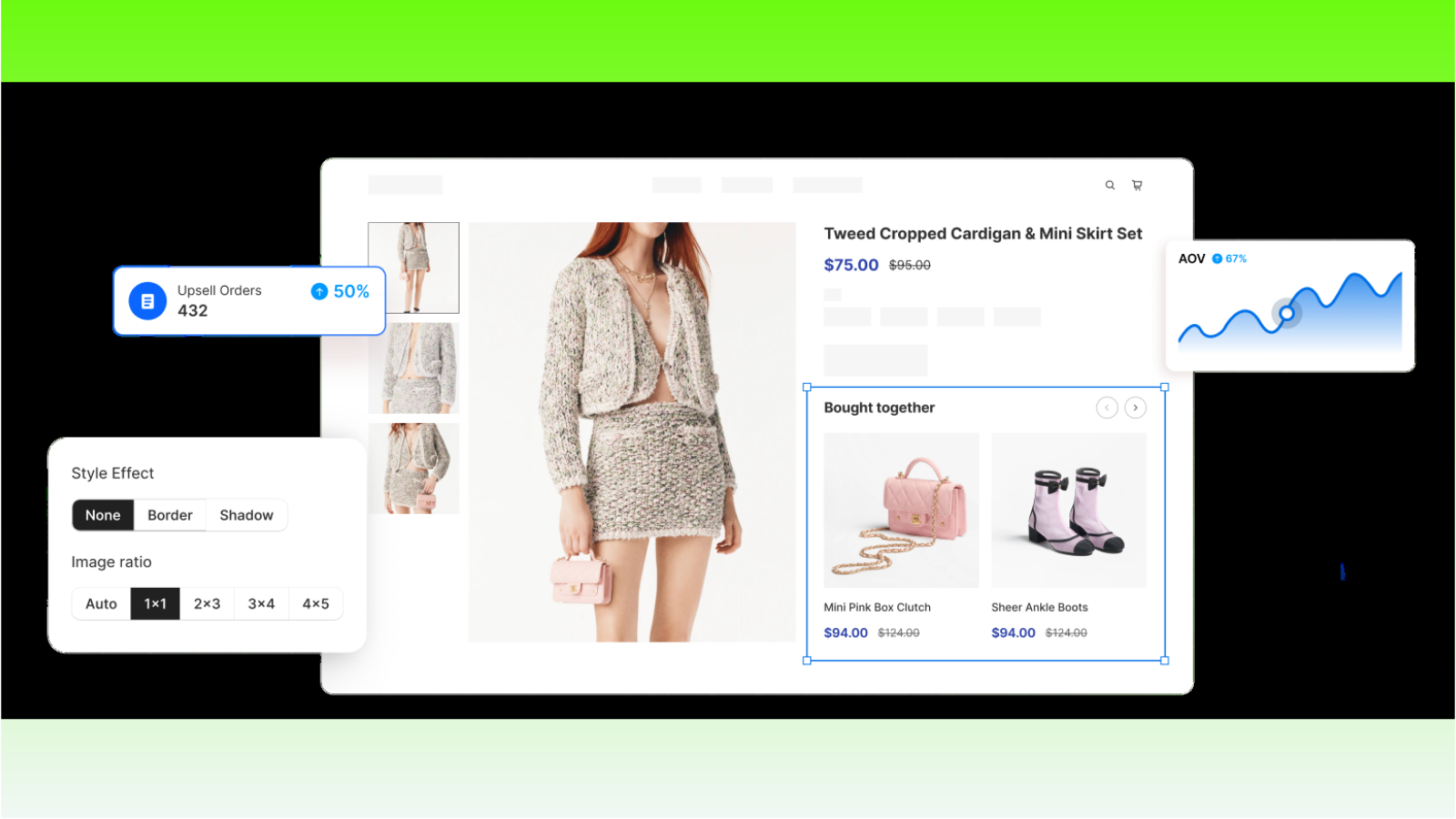
4. Design a Prominent Bundle Block on the Website
Even the most compelling bundle will underperform if customers fail to notice it. In ecommerce, presentation is critical. To convert effectively, a bundle must be highly visible, visually appealing, and positioned in areas where purchasing decisions are made.
A high-performing bundle block should be designed with the following principles:
- Clear, high-resolution visuals that communicate the value of the offer instantly. Avoid using small product thumbnails or cluttered text that dilutes attention.
- Concise, benefit-driven titles such as “Basic Skincare Combo – Save 30%” or “Everyday Essentials Kit – Value for Less”. These should be easy to scan and clearly convey the key selling point.
- Strategic on-page placement, ideally positioned directly below the product pricing or immediately after the product description. These are the moments when shoppers are evaluating their options, and a well-timed bundle can drive immediate action.
- Direct, persuasive calls-to-action (CTAs) that invite immediate engagement. Phrases like “Buy Now and Save”, “Unlock This Bundle Deal”, or “Claim Your Discount Today” create urgency and guide user behavior.
Examples of effective bundle messaging:
- “Complete Skincare System – Only $19.99”
- “Summer Gift Set – Buy Now and Receive a Free Bonus”
A professionally designed bundle block serves more than just aesthetic purposes; it plays a strategic role in increasing visibility, improving click-through rates, and accelerating conversions. Particularly for mobile users, where screen space is limited, every visual and textual element must drive clarity and action.
By ensuring the bundle offer is easy to find and instantly understandable, you create a smoother shopping experience and significantly boost its likelihood of success.
5. Combine the Combo with GWP & Upsell Strategies
An effective bundle should offer more than just a discount. Adding incentives such as free gifts or small upgrade options increases perceived value, improves conversion rates, and enhances overall customer satisfaction.
You can do this by including a complementary gift, like a cosmetics pouch with a skincare set, or by creating an easy upgrade path from a basic bundle to a premium version for a small additional cost. These tactics make the offer feel rewarding rather than purely promotional.
When shoppers feel they are getting extra value instead of just a price cut, they are more likely to complete the purchase and consider higher-value options. A bundle built around meaningful benefits and flexibility becomes more than a pricing tactic; it becomes a customer-focused experience that drives stronger revenue and long-term loyalty.
III. Intelligent Bundle Types That Customers Love
Not all combos are created equal. An effective bundle does more than increase AOV; it must also align with customer shopping behavior, desires, and specific needs. Below are the types of bundles that have been proven to perform better because they place the buyer’s experience at the center of their design:
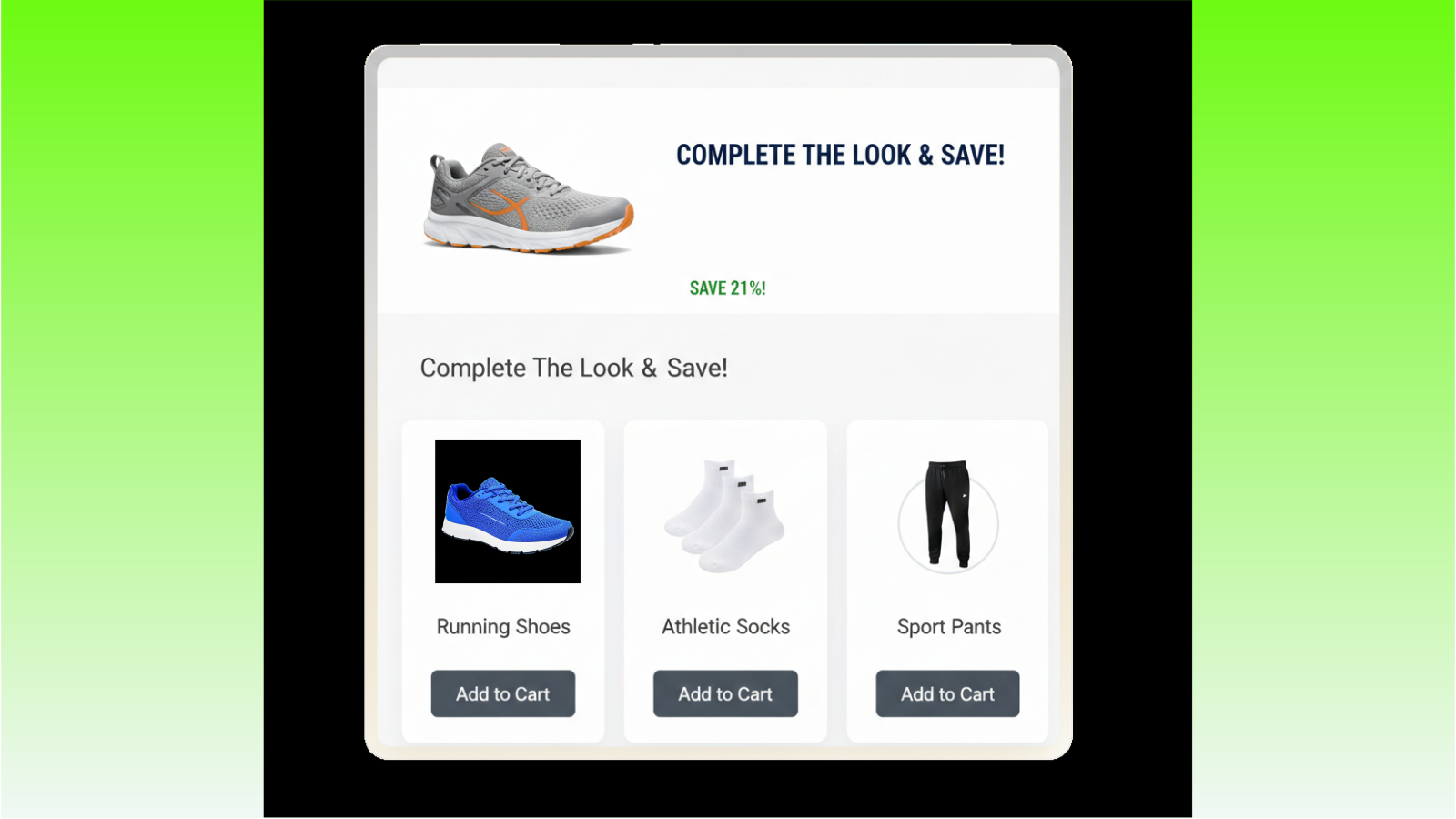
1. Usage‑Purpose Bundles
Purpose-driven bundles are designed to address a specific need or scenario through a single, well-curated purchase. This bundling approach allows customers to instantly recognize the benefit of the offer simply by reading the bundle title or viewing the included items.
For example:
- A “Basic Three-Step Skincare Set” that includes a cleanser, toner, and serum.
- A “Family Picnic Combo” consisting of a picnic mat, kitchenware, and food storage accessories.
The key benefits of this bundle type include:
- Helping customers visualize a complete, real-world use case instead of viewing each product as an individual purchase.
- Encouraging repeat purchases by offering a full solution that customers can rely on for specific needs or occasions.
- Increasing the likelihood of upselling or cross-selling complementary items, especially when shoppers are already exploring similar bundled solutions.
According to feedback from ecommerce retailers, bundles that are aligned with a clear and relatable purpose tend to convert significantly better than those assembled without strategic intent. When shoppers understand the practical value of the bundle from the outset, they are more likely to take action and complete the purchase with confidence.
2. Customer‑Segment Bundles
Customers have diverse needs, preferences, and purchasing behaviors. By identifying and targeting specific customer segments, you can create bundles that feel more relevant and personalized, which in turn increases engagement and conversions.
For example:
- A “Top Picks for Six-Year-Old Girls” bundle that includes age-appropriate toys, books, and creative learning tools.
- A “Gift Set for the Modern Mom” that features skincare products, fashion accessories, and a wellness or service voucher.
The benefits of customer-segment bundles include:
- Creating a strong sense of personalization, which makes the offer more appealing to the intended audience.
- Supporting targeted marketing strategies such as email campaigns, paid advertising, and personalized on-site recommendations.
- Enhancing the perceived relevance between the bundle contents and the unique lifestyle or desires of the customer.
When a bundle is clearly aligned with a specific buyer persona, it resonates more deeply. As a result, shoppers are more likely to engage, click through, and convert because they feel the bundle was thoughtfully created for someone just like them. This emotional alignment is a key driver of ecommerce performance in today’s highly personalized digital shopping environment.
3. “Buy X – Get Y” Bundles
This type of bundle offers an additional product when customers purchase a specific quantity. Rather than focusing on a price discount, it emphasizes the feeling of receiving extra value, which significantly enhances the customer experience.
For example:
- Buy two shirts and receive a free tote bag.
- Buy one hair care product and get a complimentary mini comb.
Why customers are drawn to this bundle type:
- They perceive it as receiving something extra rather than just a markdown, which feels more rewarding.
- Many shoppers prefer tangible gifts over abstract percentage-based discounts because it enhances the sense of gain.
- The bonus item creates an opportunity to introduce new products, encourage product trial, and drive future purchases.
Behavioral research in ecommerce shows that perceived value can be more influential in driving conversions than cost savings alone. When the added item is relevant to the customer’s interests or complements their main purchase, it boosts satisfaction and encourages a stronger emotional connection to the brand.
4. Build‑Your‑Own Combo (Customizable Bundles)
Customizable bundles allow customers to create their own product sets based on their personal preferences. Rather than being limited to a preselected group of items, shoppers have the freedom to select what works best for them.
Example bundle structure:
- Select one of the three main products, then choose one of the two available gift items.
- Combine two preferred core products with one accessory that suits their lifestyle.
Why this bundle format delivers high performance:
- It increases customer interaction by providing a sense of ownership and control during the shopping experience.
- It appeals especially to selective buyers or those with more flexible shopping budgets.
- Customers are more likely to include higher-value items when given the choice, compared to what they would accept in a fixed combo.
This approach works particularly well when your store offers a wide variety of similar products with different features, use cases, or pricing. It allows shoppers to mix and match items to build a personalized bundle that matches their individual needs. This not only improves customer satisfaction but also boosts average order value and loyalty over time.
5. Behavior‑Based AI‑Suggested Combos
As ecommerce technology evolves, many stores are leveraging artificial intelligence to create bundles that dynamically respond to each shopper’s behavior. These AI-powered suggestions generate product combinations tailored to individual browsing patterns and purchase history, making the shopping experience more relevant and efficient.
How this strategy works:
- The system monitors user activity, including products viewed, added to the cart, or previously purchased.
- Based on real-time data, it generates bundle recommendations that align with the customer’s demonstrated interests.
- Suggested bundles are displayed with messaging such as “Customers also bought…” or “Recommended combos for you.”
Benefits of using behavior-based bundles include:
- Improving conversion rates by showing bundles that align closely with each customer’s preferences and behavior.
- Reducing decision-making friction, since shoppers are not required to manually select complementary products.
- Increasing revenue from existing traffic by using personalization to encourage add-on purchases.
Reports from leading ecommerce platforms indicate that personalized bundles generated through behavioral insights often outperform static bundles. This is because they reflect actual customer intent rather than assumptions made by the seller. By presenting relevant combinations at the right time, behavior-based bundling creates a seamless, value-driven shopping journey that enhances both customer satisfaction and business performance.
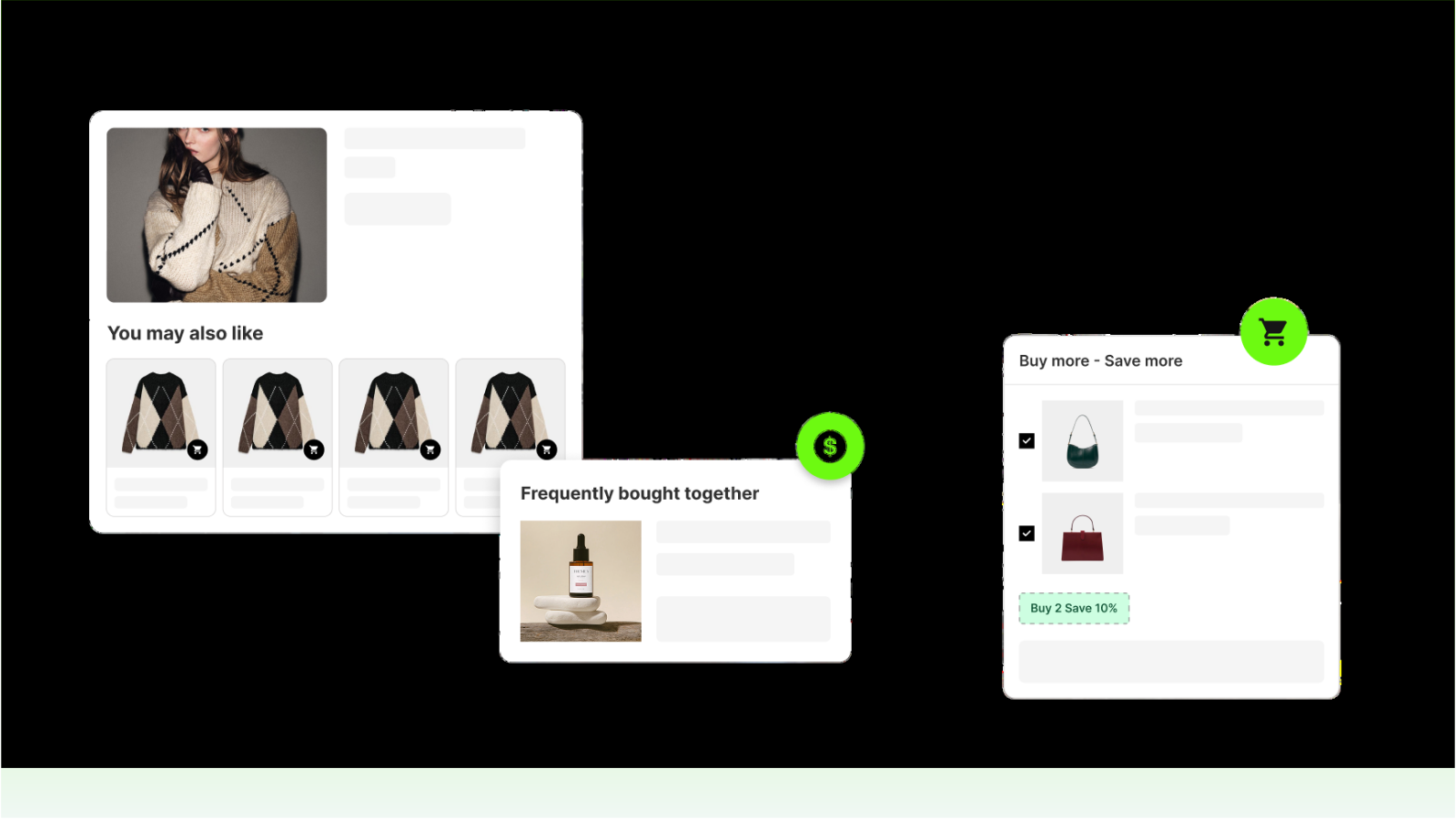
IV. Applying Zotasell to Optimize Bundles Quickly and Effectively
In today’s e‑commerce environment, simply designing an attractive combo is not enough — what matters is how you deploy and automate those bundles across the entire customer shopping journey. This is where tools like Zotasell truly add value. Instead of spending a lot of time on manual configuration or requiring technical expertise, Zotasell helps you set up and optimize bundles quickly, flexibly, and intelligently.
Automatically Display Bundles That Match Each Customer
Automatically displaying bundles that align with each customer’s behavior is a powerful way to personalize the shopping experience. By analyzing browsing history, previous purchases, and customer interactions, stores can determine which product combinations are most relevant to individual shoppers. For example, new visitors may be shown curated bundles designed to encourage first-time purchases, while returning customers may receive upgraded bundle suggestions based on their previous orders.
This approach moves beyond offering a single static combo to every visitor. Instead, it delivers personalized bundle recommendations tailored to the unique interests and needs of each customer. When shoppers see bundles that reflect their preferences, they are more likely to explore additional products. At the same time, this level of personalization enhances the overall user experience by creating a sense that the store truly understands their shopping habits and goals.
Create Dynamic Combos Based on Behavior and Segmentation
Creating dynamic bundles based on customer behavior and segmentation ensures that each shopper receives product combinations that feel relevant and timely. Since not all customers share the same preferences or purchasing intent, a bundle that performs well for one segment may fall flat with another. Tailoring bundles by audience allows businesses to meet shoppers where they are in their journey.
By using behavioral and segment-based rules, you can set up bundles specifically for first-time buyers, returning VIP customers, or visitors who have browsed but not yet purchased. These combos can also be adjusted seasonally or aligned with specific campaigns such as Valentine’s Day, Children’s Day, or Father’s Day. This level of flexibility allows you to present the right products to the right audience at the optimal moment, which significantly increases the likelihood of conversion, something fixed bundles often struggle to achieve.
Track the Performance of Each Bundle: Views, Conversion Rate, AOV
Tracking bundle performance is essential for understanding what drives results and where improvements are needed. One of the biggest advantages of using automation tools is the ability to access real-time data and make informed decisions to enhance your strategy.
With Zotasell, you can:
- See the number of bundle displays.
- Monitor the conversion rate of each combo.
- Compare the average order value (AOV) before and after implementing bundles.
- Identify which bundles perform best across different customer segments.
This level of visibility allows you to pinpoint exactly which combinations are generating revenue and which may need refinement. Over time, these insights help you continuously optimize your bundle strategy for better performance and higher returns.
Easy Customization, No Coding Required
Customizing bundles should not require advanced technical skills. Not every store owner is a developer, and thankfully, you do not need to be one to build an effective bundling strategy. With the right tools, creating smart, conversion-driven combos becomes accessible to teams of all sizes.
Zotasell offers an intuitive interface that simplifies the process from start to finish. You can:
- Select products for combos using drag-and-drop.
- Create automatic rules based on customer behavior.
- Edit how bundles appear on your storefront in just a few clicks.
- Launch new bundles instantly without writing a single line of code.
This level of ease empowers small and mid-sized businesses, as well as fast-growing brands, to execute sophisticated bundling strategies without relying on a technical team. The result is faster implementation, greater agility, and more time to focus on what matters most: growing your sales.
Afterthought
Product bundling has long been a staple in e-commerce strategy. However, the true impact lies not in whether a store uses bundling, but in how it is executed. Poorly structured bundles often fail to drive results. They can make a store seem unprofessional, reduce customer confidence, and lead to missed revenue opportunities. In contrast, a thoughtfully designed bundle can serve as a strategic asset, one that significantly increases average order value, lowers customer acquisition costs, and enhances the overall shopping experience.
With the right approach, bundling becomes more than just a pricing tactic. It becomes a value-driven experience tailored to customer needs. You do not need advanced technical skills or hours of manual setup to make it work. With just a few steps, it is entirely possible to create personalized, high-converting bundles based on real user behavior. Now is the time to move beyond bundling for the sake of appearance and start building product combinations that truly convert and contribute to your business growth.

Join in our newsletter
Need more detail?
Access our Help Center & Resources to learn how Zotasell works, explore use cases, and share with your team.